Production · · 6 min read
What a shoot dayactually looks like
From a two-person social shoot to a full crew: how a day actually runs, the bits clients never see, and why the brief decides the size of the production.
Co-founder · Creative Director
To a client, a shoot day can look like a lot of people standing around kit. In reality, the day itself is the smallest part of the job. Most of the work that makes it count happens before anyone presses record, and no two shoot days look the same.
Not every shoot is a film set
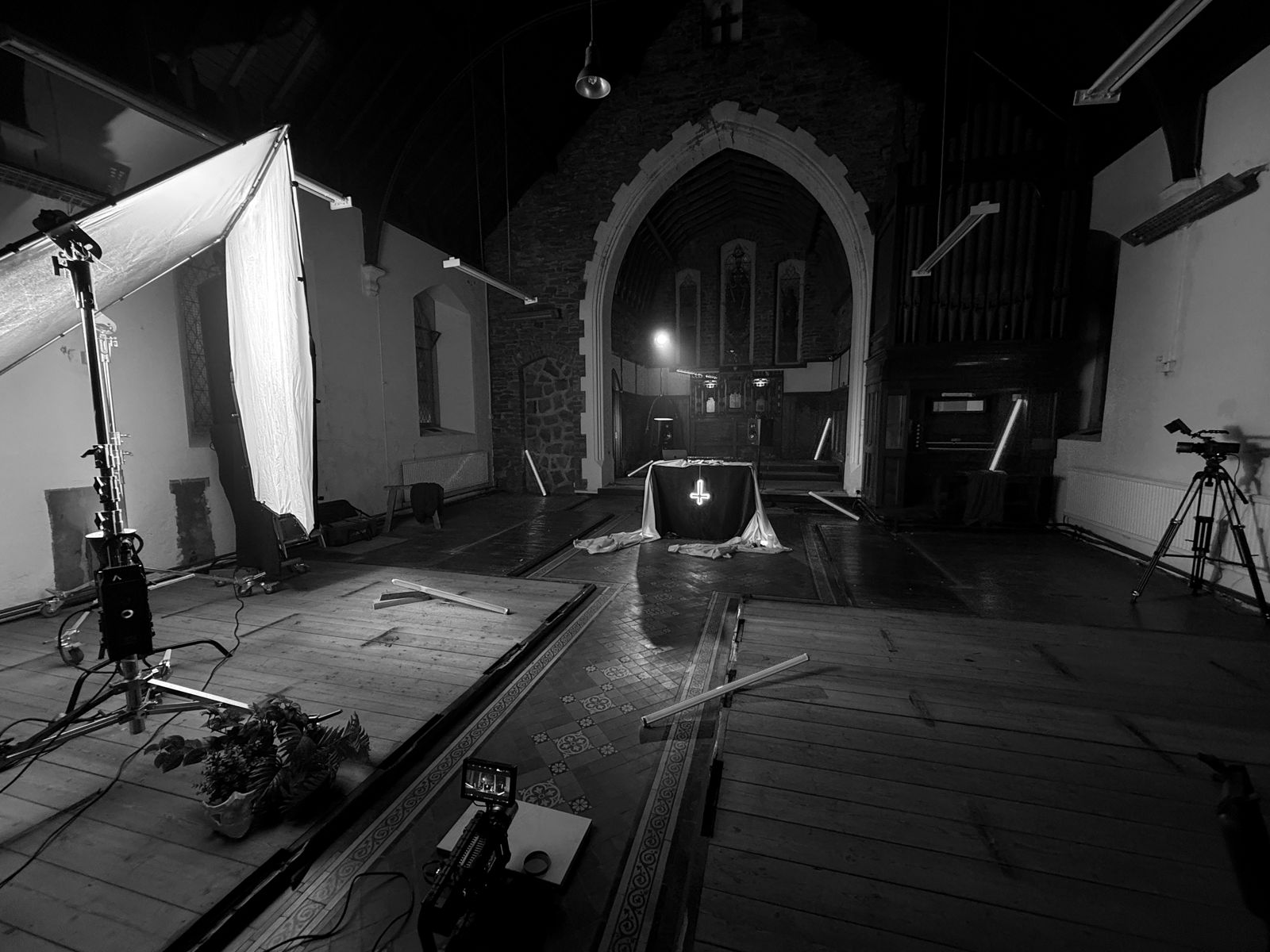
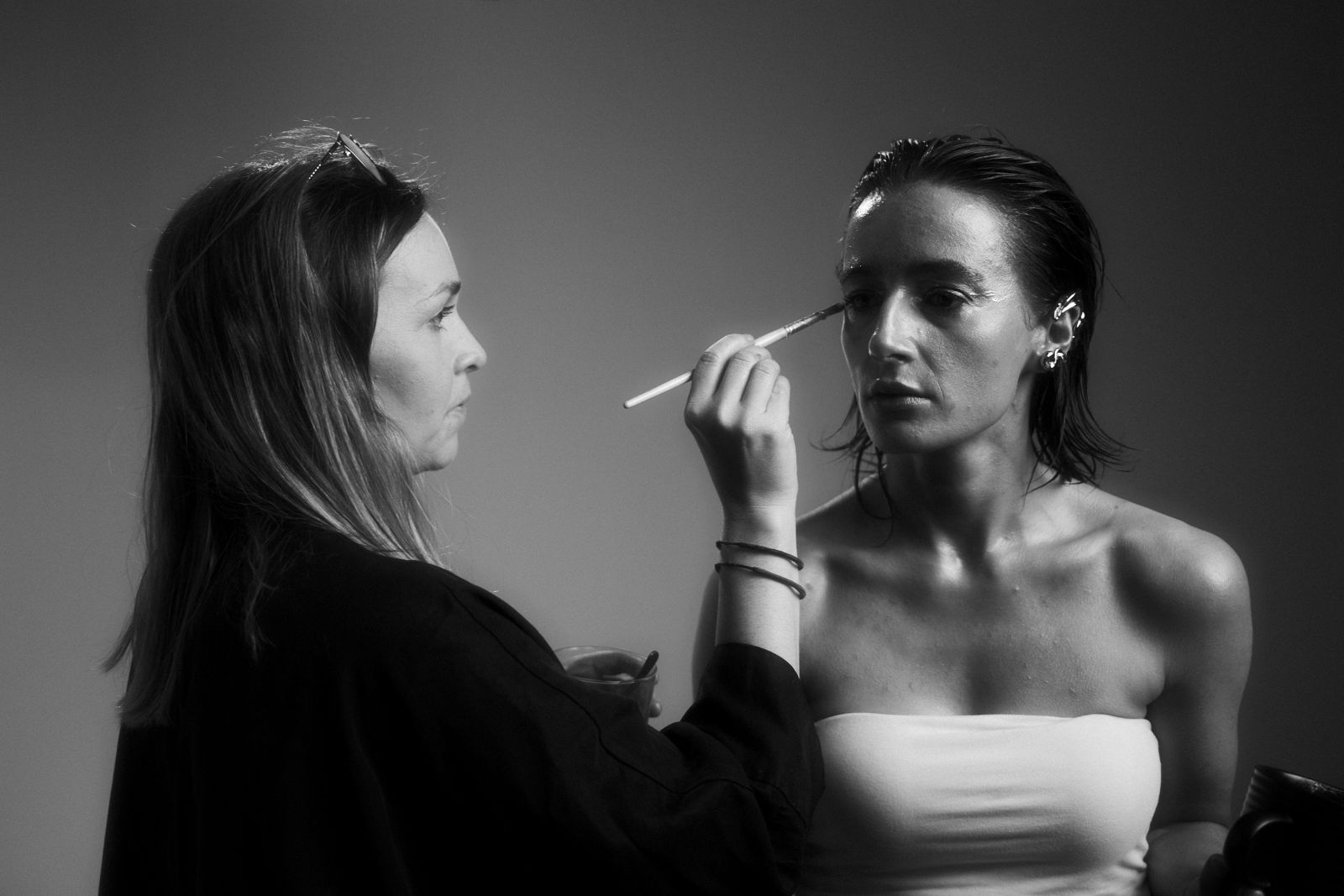
When people picture a production, they picture the big version: a crew of six or eight, a camera department, lighting, sound, a make-up artist, a runner, a van full of kit. We do plenty of those, and some briefs need them. A brand film, a podcast with three cameras, anything with a vehicle moving at speed.
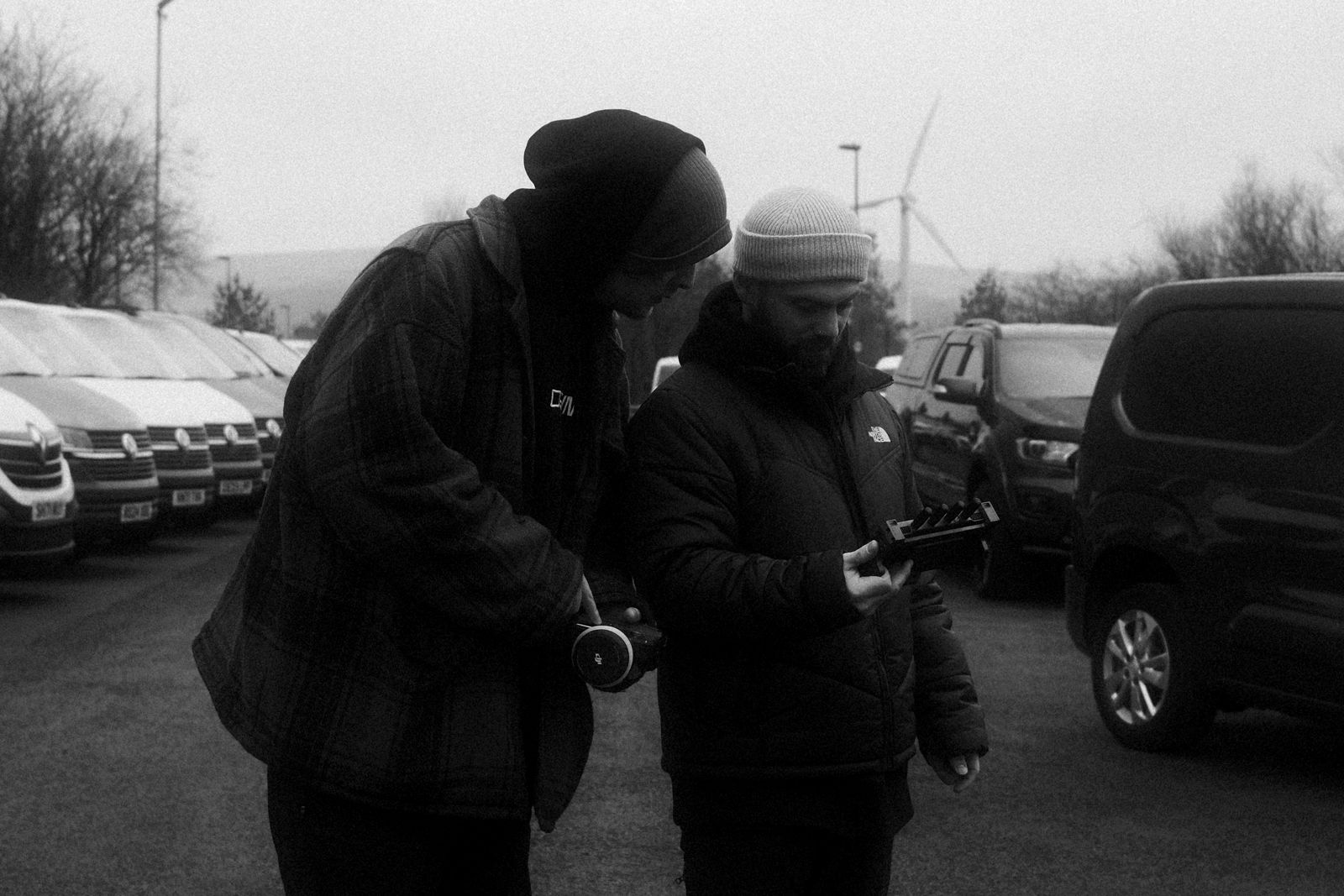
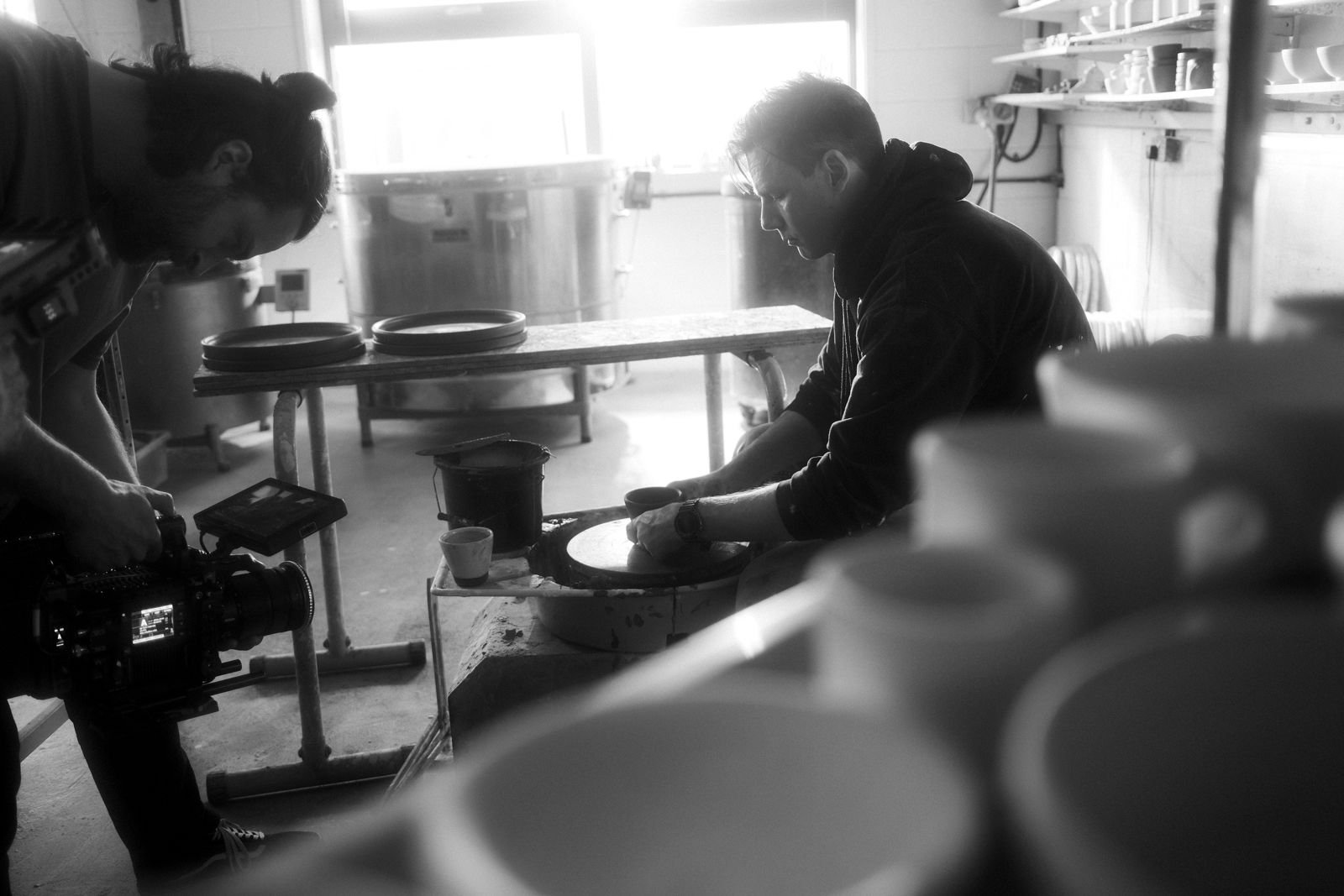
But a lot of what we make doesn't. A social shoot for a gym, a dental practice or a ceramics studio might be two of us, a mirrorless camera, a couple of phones on gimbals and a small light. It's quicker, it's cheaper and, crucially, it's less intimidating for the people in front of it. Nobody performs naturally with a boom mic over their head. The brief decides the size of the crew, not the other way round.
Before the day
Every shoot starts with the distribution plan, not the camera. We already know which platforms each piece is for, what the hooks are, which formats need vertical framing and which need wide, and how many clips the day needs to produce. That plan becomes a shot list and a running order, so on the day nobody's guessing.
The week before, we lock the practical stuff: who's on camera and when, which locations we need access to, what has to be in shot (the products, the vehicles, the kit, the people) and what absolutely can't be. A recce if the location's new to us. A call sheet goes out to everyone involved, client included, so the day is already decided before it starts.
How the day runs
- Call time. Crew arrive well before the client. Lighting goes up, cameras are built, audio is checked and monitors are set so the client can see exactly what we're capturing. On a social shoot that's twenty minutes. On a film it's the first two hours.
- The hero piece first. The main interview, the main performance, the scripted piece. We shoot it while everyone's energy is highest and before the light changes.
- Then the coverage. Vertical cutaways, alternative intros, the hooks that will open each clip on social. This is where most of the volume comes from, and it's often shot quickly and loose.
- Stills alongside. Wherever we can, someone's shooting photography between setups, so one day covers the website and the feed as well as the video.
- Leave room for the unplanned. Someone is always watching for the moment that wasn't on the shot list. They're often the best clips of the day.
- Wrap. Cards backed up twice before a single light comes down. Then everything's checked against the shot list so we know we've got what we came for.
"A good shoot day feels relaxed. That's only possible because everything stressful happened the week before."
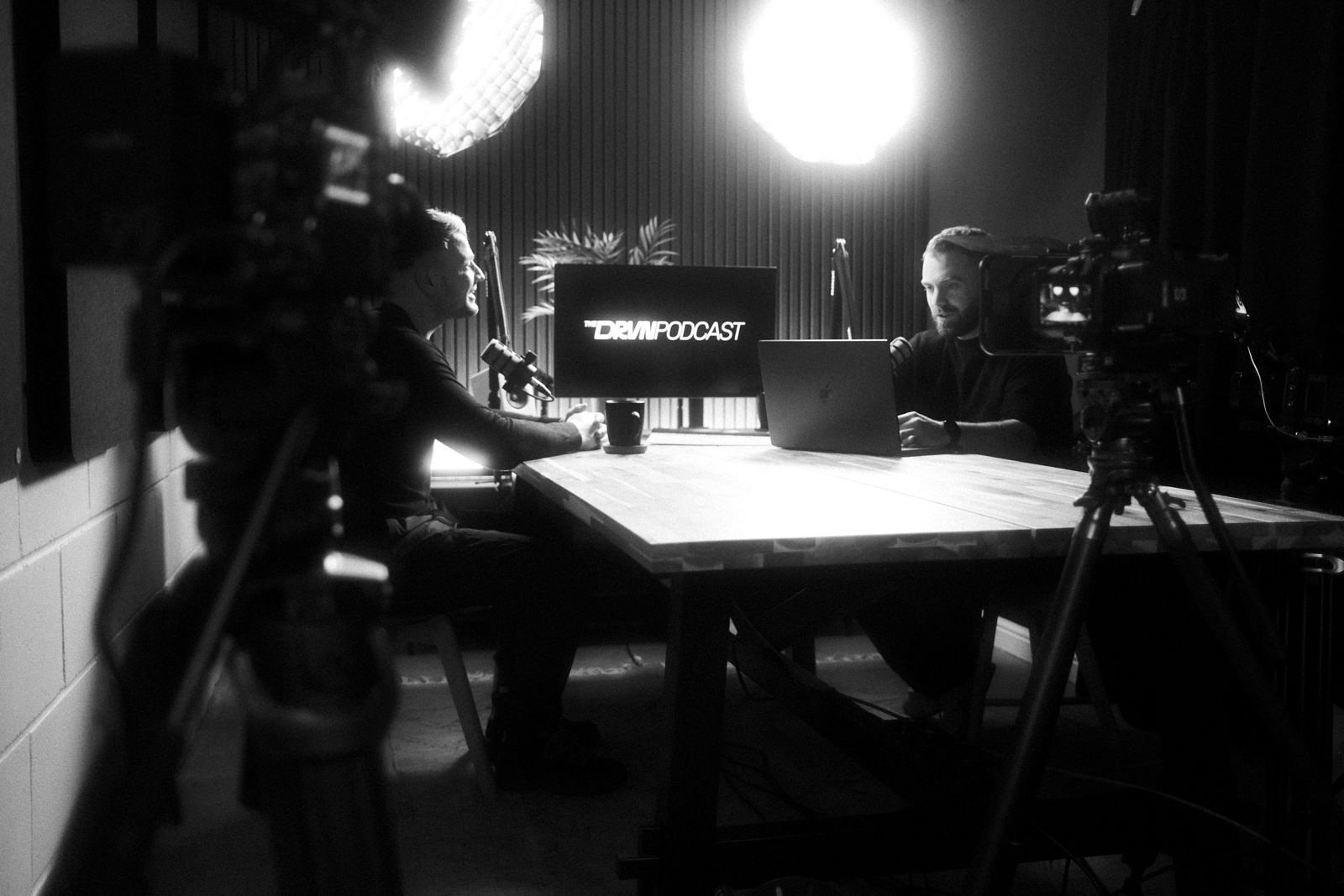
Studio or location? The deliverables decide
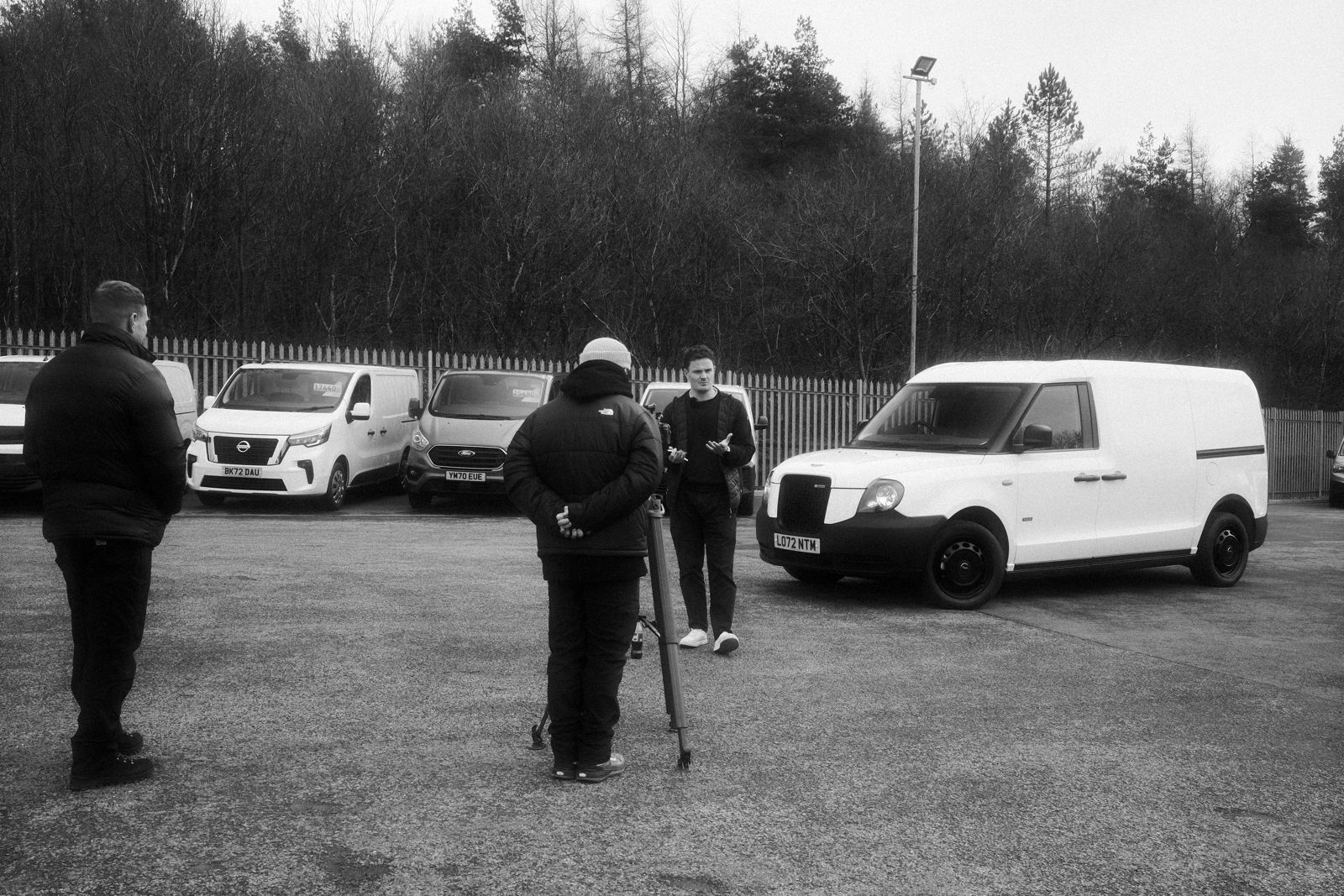
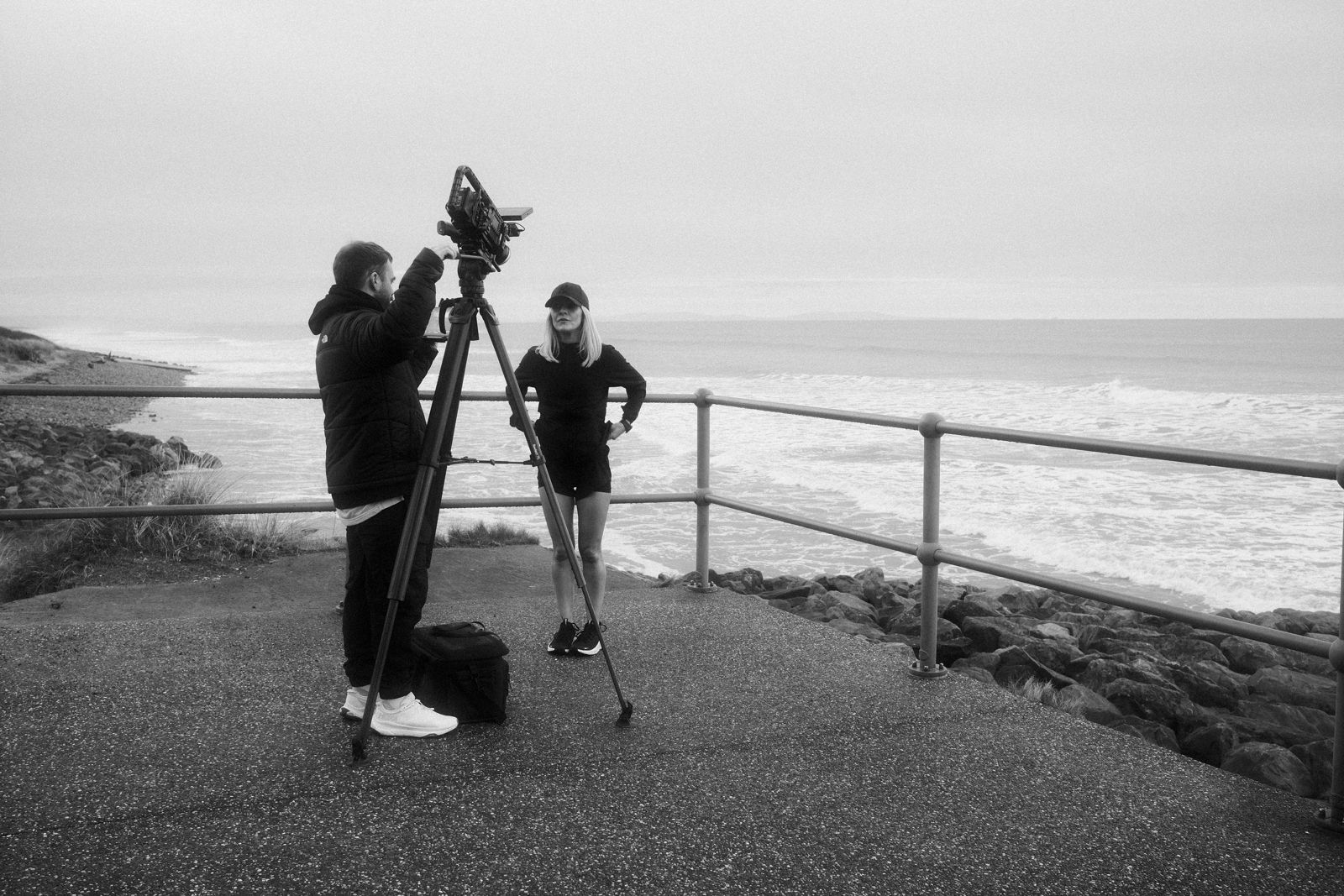
Not every shoot happens in the studio, and most of ours don't. A gym has to be filmed in the gym, a van dealer on the forecourt, a ceramics studio at the wheel. If the deliverable is content about a place, its people and the way they work, we go to them. Location days are usually longer and looser, and the plan has to flex: we'll move a setup to chase the sun, or shoot an interview in a van if that's where it's dry. The same crew and kit travel anywhere in the UK and beyond.
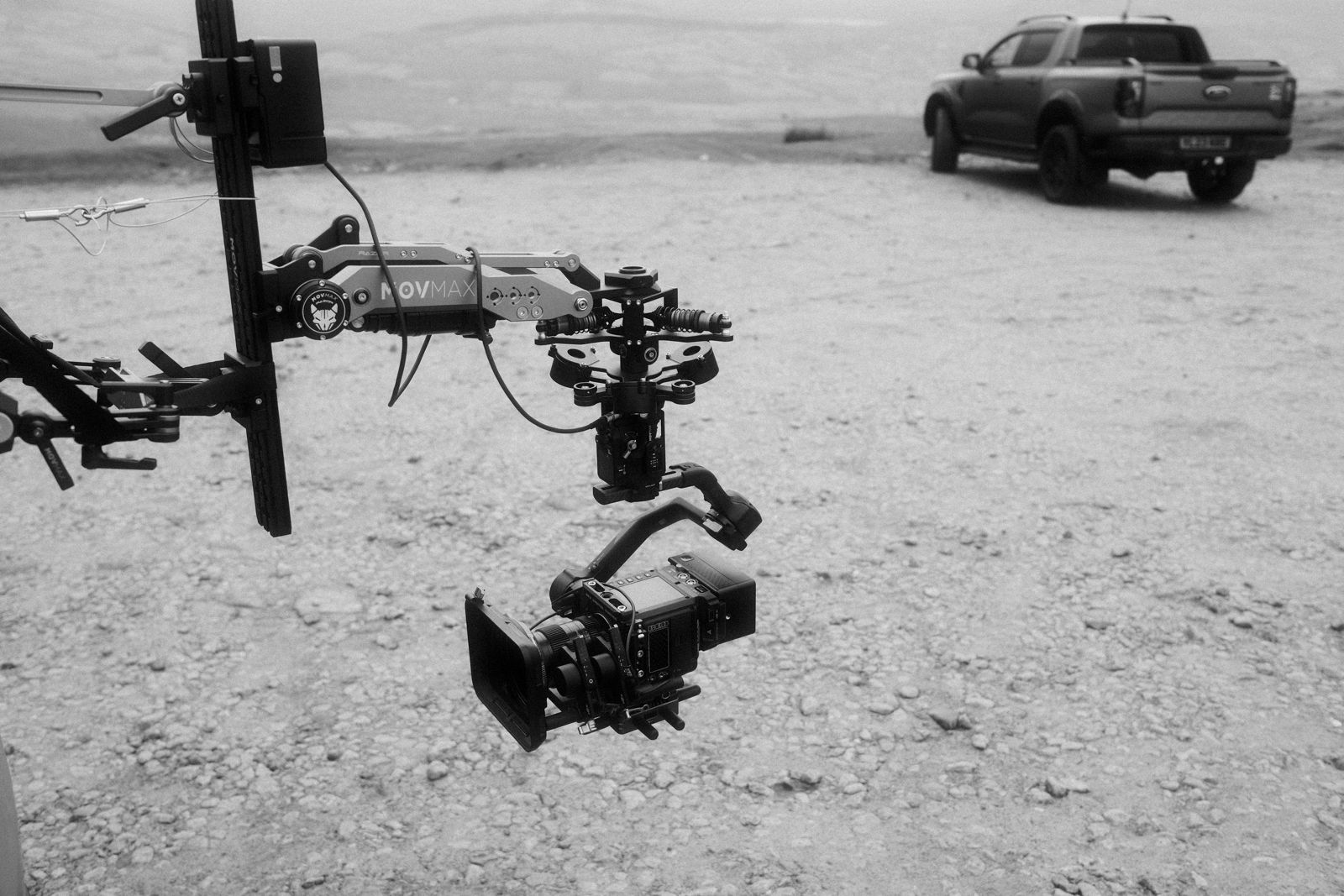
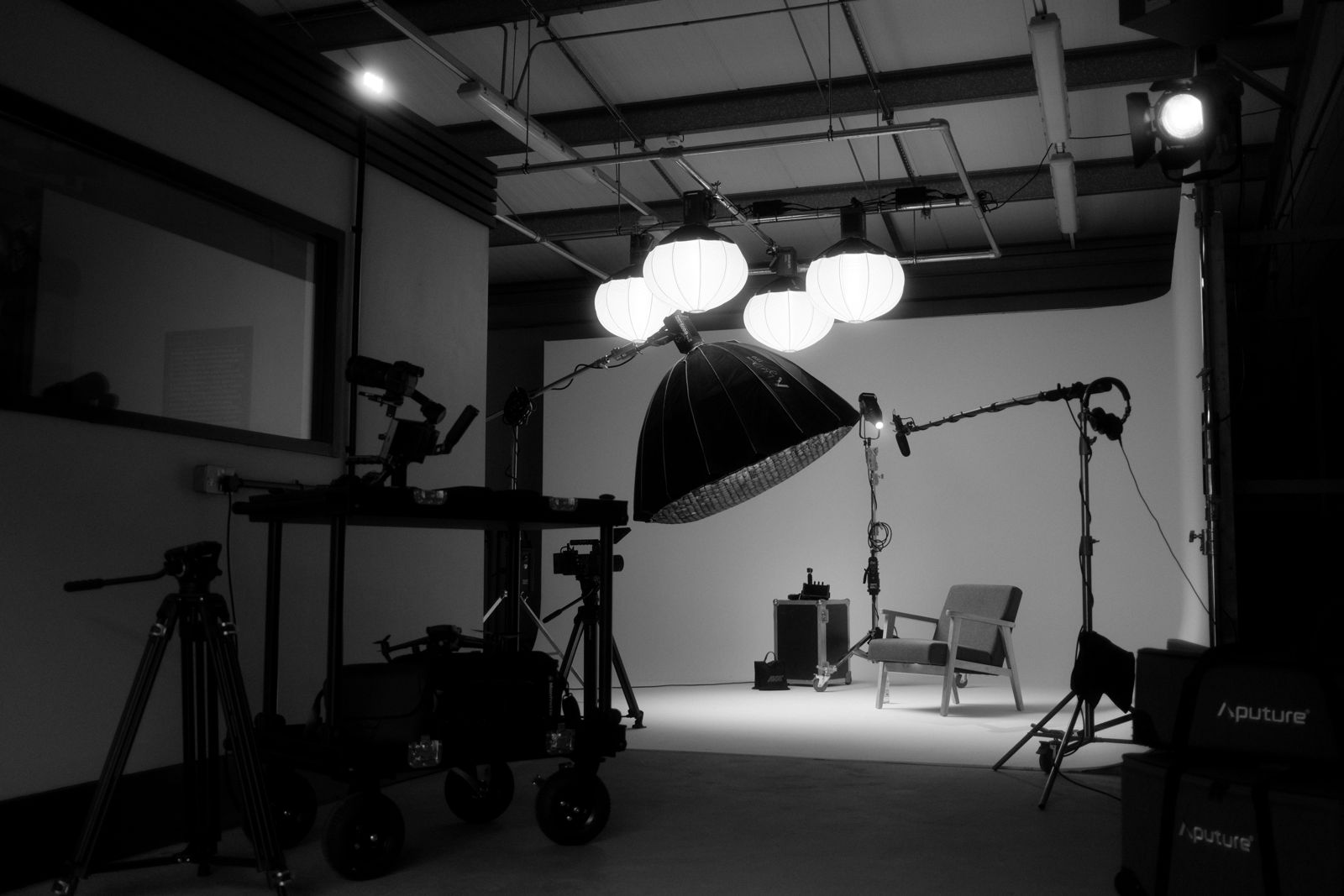
What the studio in Ebbw Vale gives us is the option. When a brief needs an extensive setup, a lit 25m² infinity cyc, the four-person podcast set, a product on a clean background, controlled sound, a green room and secure loading so vehicles and kit can come straight in, it's there at our disposal. And when a brief just needs a reliable place to shoot from, it's that too: no hire fees eating the budget, no packing down at a hard stop, no compromising the setup because the room isn't right.
After the wrap
Footage goes straight into the edit suite, in house. Because the same team planned the distribution, the editors know exactly what each cut is for and where it's going. The first clips can be live within days, and the numbers from those clips shape what we cut next.
If you've never been on a shoot with us, you're welcome to come and see one, big crew or small.